
What Causes Wear in Conveyor Chains?

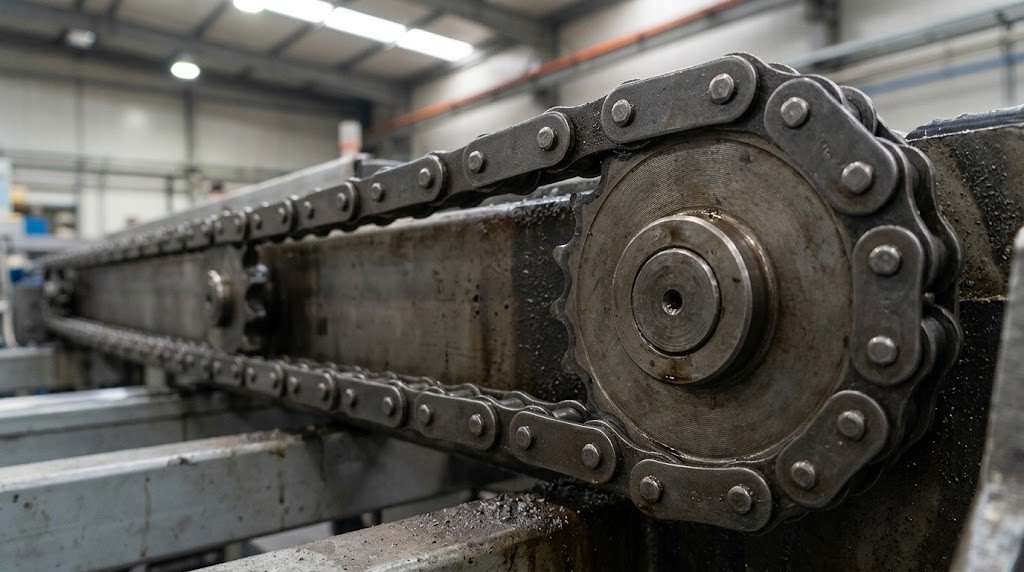
Wear in conveyor chains is the gradual loss of material caused by friction, load and environmental effects acting between chain pins, bushings, rollers, plates and sprockets during operation. The main causes of wear include inadequate lubrication, incorrect chain selection, overloading, misalignment, contamination, unsuitable sprockets and irregular maintenance.
A certain degree of wear is considered normal in conveyor systems. However, chain elongation within a short period, irregular roller movement, increased noise levels or the chain failing to seat properly on the sprocket indicate that operating conditions need to be checked.
Early signs of wear typically appear in the following areas:
-
Measurable increase in chain pitch
-
Play in pin and bushing joints
-
Irregular roller rotation
-
Side wear on chain plates
-
Tooth profile deformation on sprocket surfaces
-
Increased vibration during operation
-
Metallic running noise
-
The chain drifting to one side
-
Friction marks on guide surfaces
-
Localized stiffening or binding in the chain
Proper chain selection and regular inspection help both the chain and the other mechanical components of the conveyor system operate more reliably.