

Conveyor Chains
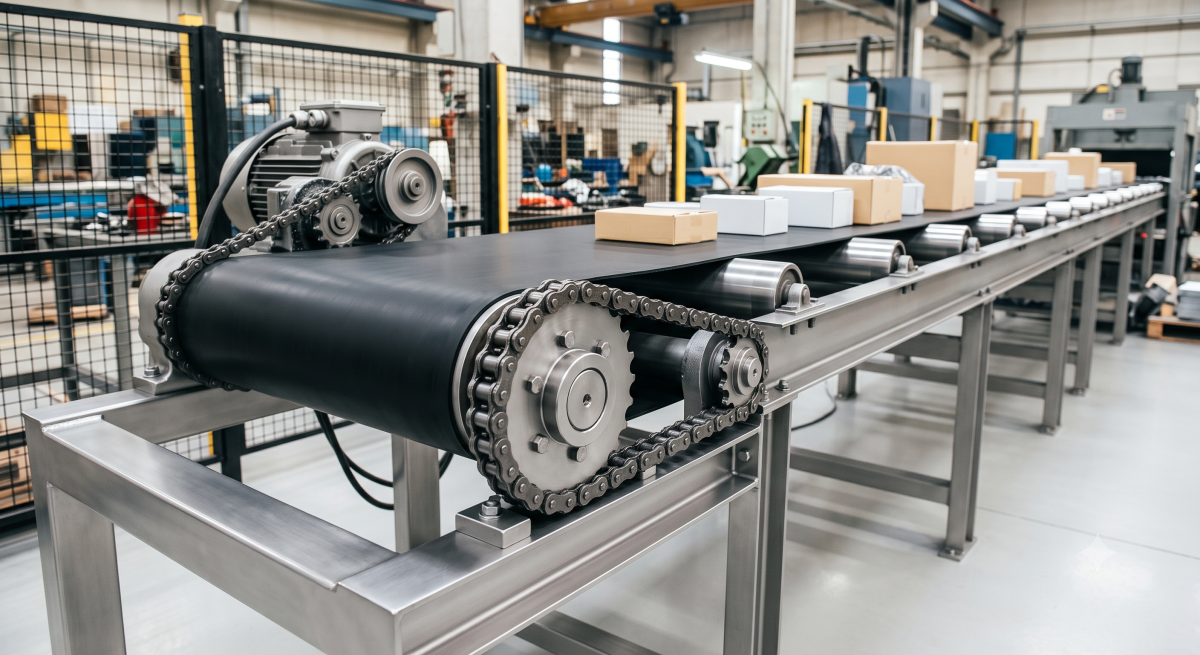
Conveyor Chains for Industrial Material Handling
A conveyor chain is the main element that pulls, and often carries, the load in systems that move material from one point to another. It is used in chain conveyors, bucket elevators and drag (scraper) conveyors in cement, mining, timber, sugar, recycling, automotive and food plants. Zincir Gross supplies engineering conveyor chain to metric standards, plus custom-dimension versions, across a wide range of pitches and breaking loads.

M Series
M Series chains are durable chain types used for material handling in industrial conveyor systems.
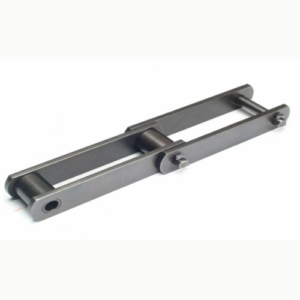
F Series
F Series chains are durable conveyor chains developed for heavy and continuous material handling.

Y Series
Y Series chains are chain types used for the steady conveying of materials and products in industrial conveyor systems.
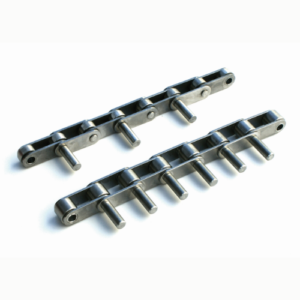
Non-Standard
Non-standard conveyor chains are chain types designed to meet the requirements of specific machines and production lines.
Conveyor chain series: M, F, Y and custom
The table below summarises our conveyor chain types with their standards, pitches and breaking load ranges. Because each chain size is offered in several pitches, the same breaking load can be adapted to different conveyor layouts.
| Series | Standard | Reference range | Standard pitches | Breaking load | Key feature / versions |
|---|---|---|---|---|---|
| M Series | ISO 1977 | M-20 … M-900 | 40–800 mm | 20–900 kN | Bush only, small roller, big roller and flanged roller; MT, MC versions and attachments |
| F Series | DIN 8165 (FV) | FV-40 … FV-630 | 40–400 mm | 40–630 kN | FVT and FVC versions; attachment types |
| Y Series | Y series | Y-1 … Y-4 | 50.8–254.0 mm | 38–258 kN | YT and YC versions |
| Non-Standard | Special references | E.g. 70350LT003, 70500LT…, 70630LT006 | E.g. 35 mm and 63 mm; other pitches on request | Depends on reference | Type A and B; fixed-bush and zinc-plated versions |
Roller types in the M series
- Bush only: for lines where the chain slides on a track or the bush engages the sprocket directly.
- Small roller: reduces friction and wear at the sprocket.
- Big roller: the rollers roll on a rail and carry the load, lowering chain pull on long, loaded conveyors.
- Flanged roller: the flange guides the chain laterally on the rail.
Technical criteria for selecting a conveyor chain
- Breaking load: Chain pull is calculated from the conveyed load, chain weight, conveyor length and friction. Leave an adequate safety margin between breaking load and working load.
- Pitch: A larger pitch lowers chain weight per metre and cost; a smaller pitch allows smaller sprockets and smoother running. Pitch is also chosen to suit attachment or bucket spacing.
- Roller type: Whether the load is carried by the chain itself or by rollers running on a rail determines roller type and diameter.
- Environment: Abrasive dust, moisture and temperature affect the choice of bush and roller, the need for a coating (e.g. zinc plating) and maintenance intervals.
- Attachments: If buckets, scrapers, pallets or carriers are to be fitted, define the attachment type and hole dimensions from the start.
- Sprocket compatibility: Conveyor chain sprockets are selected by chain series, pitch and roller diameter. Never run a new chain on worn sprockets.
- Lubrication and maintenance: Wear between pin and bush elongates the chain; suitable lubrication, correct tensioning and regular elongation checks extend chain life.
Standards and how to read the codes
- M series (ISO 1977): the number after the letter is the breaking load in kN, so M-20 means 20 kN and M-900 means 900 kN. The pitch is specified separately when ordering, e.g. 40, 50, 63, 80, 100 or 125 mm for M-20.
- F series (DIN 8165): in FV-40 to FV-630 the number is again the breaking load in kN. FVT and FVC are different design versions of the same series.
- Y series: numbered Y-1 to Y-4, with breaking loads from 38 kN to 258 kN.
- Non-standard chains: the code is a maker-specific reference; matching requires pitch, plate and roller dimensions or a sample.