
Machine Chain Manufacturing

When selecting products for machinery chain production, the operating load, chain dimensions, operating speed, connection configuration, and operating environment must be evaluated together. Specifying the appropriate product for chains used in power transmission or material handling depends on accurately defining the machine's existing mechanical layout. Submitting inquiries to Zincir Gross accompanied by technical specifications clarifies the exact scope of the required chain.
Key criteria to serve as a baseline for production and product evaluation include:
-
The machinery and specific application area in which the chain operates.
-
Fundamental dimensions such as pitch, inner width, and roller diameter.
-
Working load, motion profile, and frequency of use (duty cycle).
-
Environmental conditions including moisture, dust, temperature, and chemical exposure.
-
Connecting link, attachment, and installation requirements.
Generating an inquiry based solely on the visual appearance of the chain is insufficient. Visually similar products often differ significantly in critical dimensions and connection details. An existing physical sample, technical drawing, or legible product marking provides a much clearer baseline for accurate technical evaluation.
Product Requirements in Machinery Chain Manufacturing
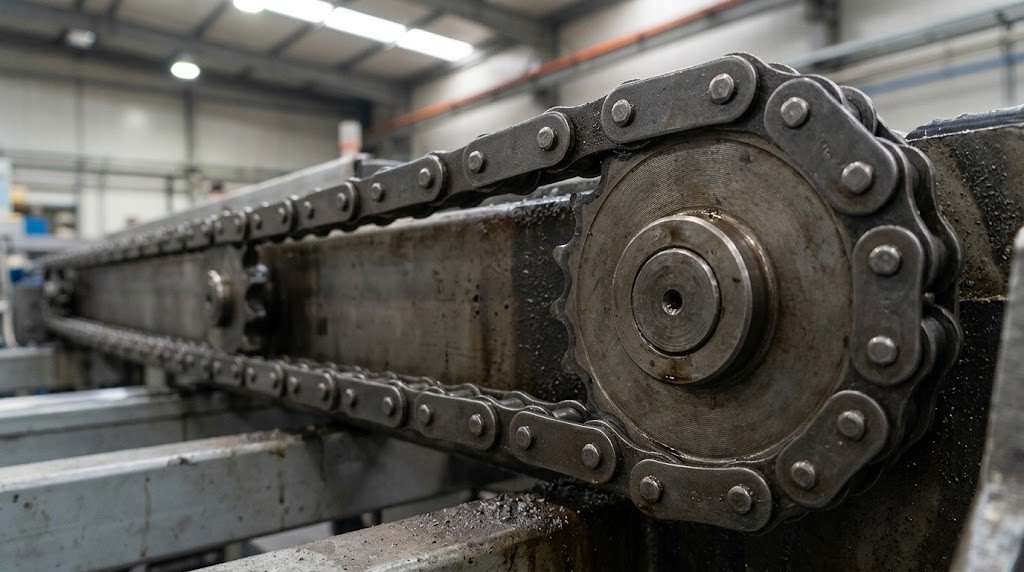
Machinery chains are utilized for diverse functions, including power transmission, conveying, pulling, and driving specific mechanical operations. When defining product requirements, the functional role of the chain within the system must be clearly established. Evaluation criteria differ between a pure power transmission chain and a chain equipped with conveying attachments.
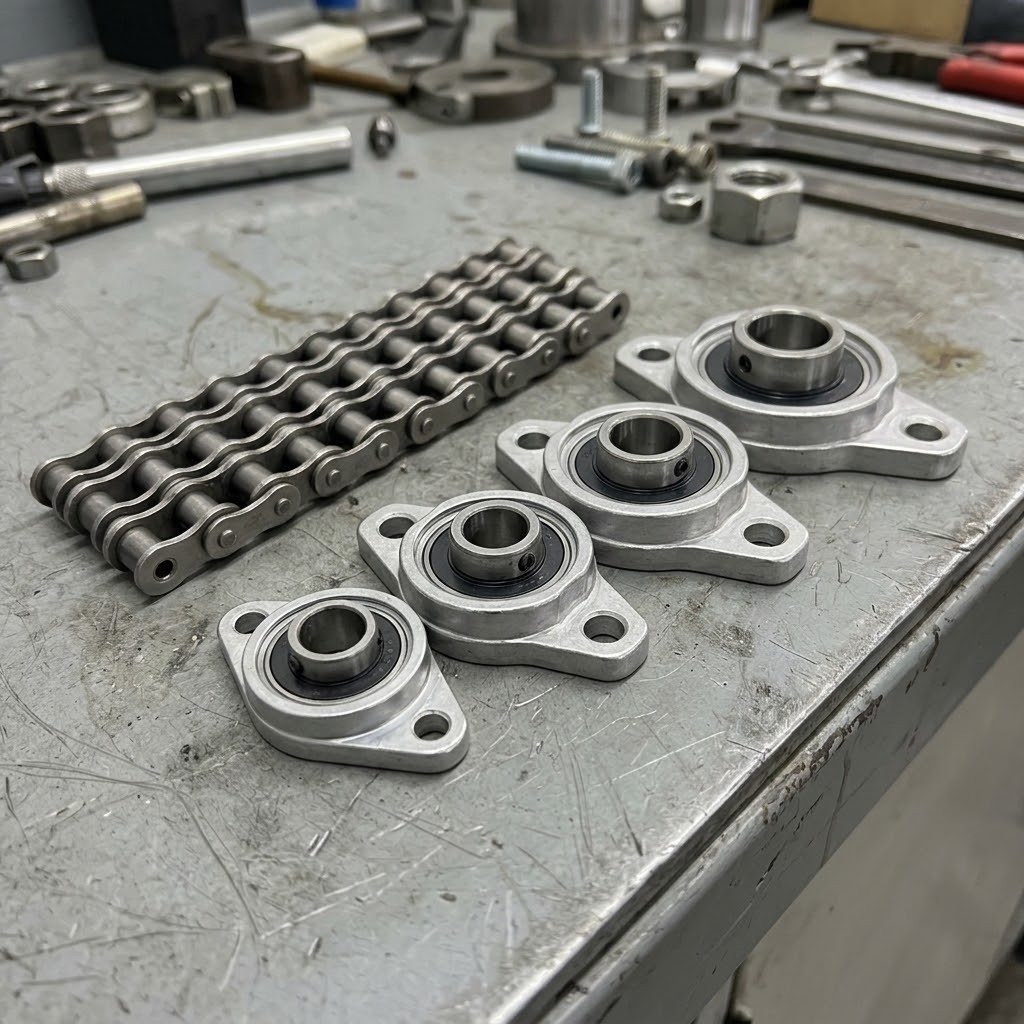
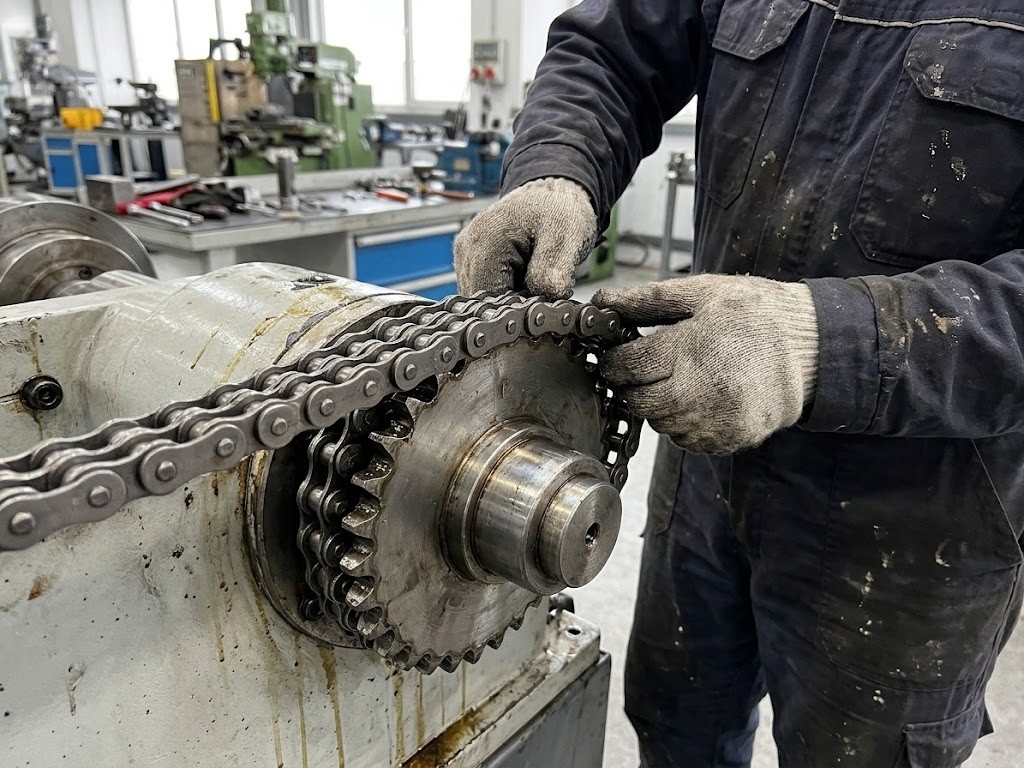
Roller chains, multi-strand configurations, and chains with specialized attachments are among the product categories evaluated based on the application. However, ensuring compatibility with the machinery cannot be determined solely by the product group name. The sprockets with which the chain meshes and the installation clearances must also be incorporated into the technical assessment.
In machinery chain manufacturing, defining the correct scope requires comprehensive technical data that simultaneously outlines the chain's operational duty, existing connection arrangement, and working conditions.
When preparing an inquiry for Zincir Gross, the request should clearly specify whether it involves replacing a single chain, fulfilling routine recurring parts demand, or initiating a project-based evaluation.
Chain Evaluation Based on Technical Dimensions
Chain dimensions form the foundation of accurate product matching. Pitch refers to the distance between the centers of two consecutive pins. Other dimensions, such as inner width and roller diameter, are evaluated to verify proper engagement with the sprocket. Technical assessments must never rely on a single dimensional value.
The table below shows the information that can be shared when preparing an inquiry:
| Evaluation Parameter | Required Information | Contribution to the Inquiry |
| Basic dimensions | Pitch, inner width, roller diameter | Defines the fundamental chain structure |
| Strand arrangement | Single-strand (simplex) or multi-strand (duplex/triplex) specification | Clarifies the existing drive configuration |
| Length | Link count or total chain length | Establishes order quantity and scope |
| Connections & attachments | Connecting link style and attachment details | Specifies assembly and installation requirements |
| Operating conditions | Load, operating speed, and environmental factors | Supports operational suitability analysis |
Providing dimensional parameters together provides a far more definitive technical baseline compared to inquiries based solely on total length or a photograph.
Because measurements taken from worn physical samples can be misleading, original machine documentation or initial component specifications should also be included with the inquiry whenever available.
Product Construction Suited to the Operating Environment
When evaluating machinery chain manufacturing, the characteristics of the operating environment must be specified separately. A dusty production area, a humid section, or an application subject to temperature fluctuations may each require distinct engineering assessments. Base material and surface treatment specifications must be evaluated alongside operating conditions.
The inquiry should also clarify whether the chain operates continuously or intermittently. In systems characterized by frequent start-stop cycles, detailing the duty cycle and motion profile ensures a more accurate operational analysis. Cleaning protocols, washdown routines, and relubrication access are additional factors that should be incorporated into the technical review.
Environmental data serves as complementary technical information that enables the chain to be assessed not only by dimensional parameters, but also by actual operating conditions.
Observations regarding the existing chain—such as accelerated wear, elevated noise, or irregular motion—can be shared in the inquiry submitted to Zincir Gross. While these symptoms alone do not dictate final product selection, the overall mechanical condition of the machine must also be inspected.
Specialized Connection and Attachment Requirements
In conveying applications, components mounted directly onto the chain constitute a distinct section of the product inquiry. The geometry of the attachments, hole positioning, attachment spacing (pitch intervals), and mounting orientation on the chain must be clearly defined. Providing base chain dimensions alone is insufficient for specifying an attachment chain.
If available, fully dimensioned technical drawings should be provided. When evaluations are based on physical samples, photographing the attachment hardware from multiple angles is highly recommended. Right-hand and left-hand configurations or recurring attachment patterns must be specifically indicated.
In inquiries for chains with custom attachments, specifying attachment dimensions and link interval spacing eliminates technical ambiguities and clearly defines assembly requirements.
If modifications to the existing system are planned, simply replicating the legacy component must be distinguished from the requirements of the redesigned application. The inquiry should clearly articulate the intended operational parameters.
Pre-Order Technical Preparation
Systematic preparation of machinery chain inquiries minimizes the need for supplementary data requests during engineering review. The following steps should be followed prior to ordering:
- Specify the machine type and the chain's operational function.
- Record existing product codes and fundamental dimensions.
- Provide clear photographs of the chain, sprockets, and connection interface.
- Define the required chain length, order quantity, and attachment specifications.
- Detail environmental conditions and any specialized application requirements.
For volume requirements, it should never be assumed that different machines utilize identical chains. Preparing a separate technical specification sheet for each individual application prevents procurement discrepancies.
For products requiring engineering evaluation within machinery chain manufacturing, physical dimensions, samples, and operating data can be submitted to Zincir Gross. An inquiry with complete technical details ensures a precise and transparent assessment of the optimal product solutions tailored to your machinery.